About This Treatment
Chemical peeling is a non-surgical dermatological treatment in which a carefully selected chemical solution is applied to the skin to exfoliate the outer layers and encourage skin renewal.
Depending on the patient's skin type, concern, and treatment goals, different types and strengths of chemical peels may be used. Chemical peels can be considered for concerns such as acne, post-acne marks, pigmentation, uneven skin tone, sun damage, rough skin texture, and selected signs of skin aging.
The dermatologist evaluates the skin before treatment and selects the appropriate peel and treatment protocol. Several sessions may be recommended depending on the condition being treated and the desired outcome.
Chemical peeling should be performed under appropriate dermatological supervision, particularly for deeper pigmentation, sensitive skin, active skin conditions, or patients with a history of pigmentation after procedures.
Benefits
Helps improve uneven skin tone
May reduce the appearance of superficial pigmentation and dark spots
Helps manage selected types of acne
Can improve the appearance of post-acne marks
Helps improve skin texture and roughness
May reduce the appearance of fine lines
Helps remove accumulated dead skin cells
Promotes smoother-looking skin
Can improve the overall appearance of dull skin
Treatment can be customized according to skin type and concern
Procedure
1. Skin Assessment
The dermatologist examines the skin and discusses the patient's concerns, medical history, current skincare products, medications, and previous procedures.
2. Skin Preparation
The treatment area is gently cleansed to remove makeup, oil, and impurities. Depending on the selected peel, specific pre-treatment skincare may be recommended.
3. Application of the Peel
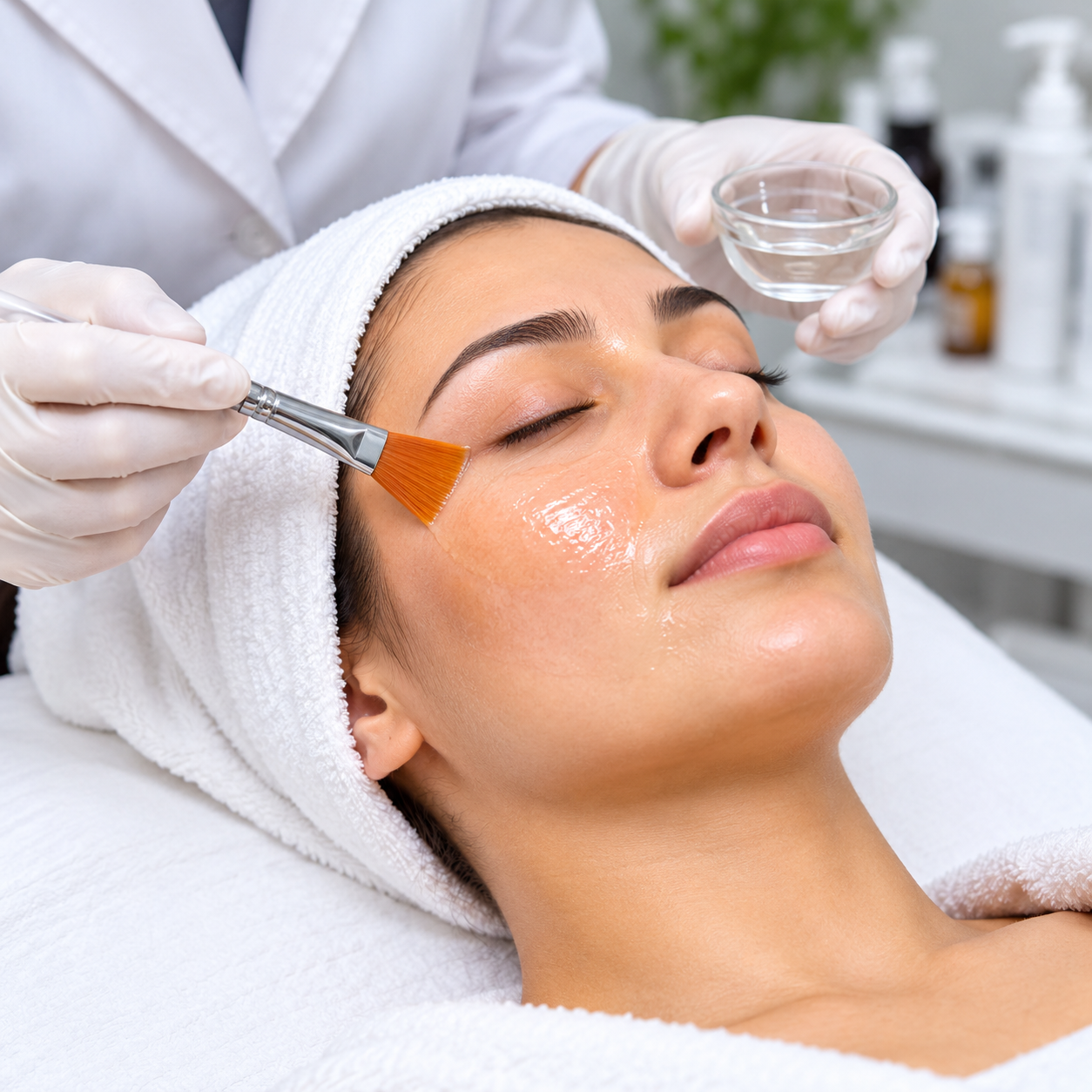
The selected chemical solution is carefully applied to the treatment area. The type, concentration, and duration of application depend on the patient's skin and the condition being treated.
4. Neutralization or Removal
Depending on the type of peel used, the solution may be neutralized or removed after the recommended exposure time.
5. Post-Treatment Care
A suitable moisturizer and sunscreen are applied. The dermatologist provides specific aftercare instructions to protect the treated skin and support recovery.
6. Follow-Up
The number and frequency of sessions depend on the skin condition, type of peel, response to treatment, and treatment goals.
Recovery
Recovery depends on the type and strength of the chemical peel.
A mild peel may cause temporary redness, dryness, tightness, or mild peeling. Some patients may experience visible flaking for several days.
During recovery:
Use sunscreen as recommended by your dermatologist.
Avoid unnecessary sun exposure.
Keep the skin moisturized.
Avoid picking or peeling the treated skin.
Avoid harsh scrubs and irritating skincare products until advised otherwise.
Follow the dermatologist's post-treatment instructions.
Avoid additional cosmetic procedures on the treated area until the skin has recovered.
Deeper peels can require a longer recovery period and should only be performed when clinically appropriate under qualified dermatological supervision.
Frequently Asked Questions
Is chemical peeling safe?
Chemical peels can be safe when the appropriate peel is selected and performed correctly by a qualified professional. The type and strength of peel should be determined after evaluating the patient's skin
Does chemical peeling hurt?
Most superficial peels cause mild tingling, warmth, or stinging during application. The level of discomfort depends on the type and strength of the peel.
How many sessions are required?
The number of sessions varies depending on the condition being treated, the type of peel used, and the patient's response. Your dermatologist can recommend an appropriate treatment schedule.
Can chemical peeling treat acne?
Chemical peels may be used as part of a treatment plan for selected types of acne. The appropriate peel depends on the severity and type of acne.
Can chemical peeling remove acne scars?
Chemical peels can improve certain superficial acne scars and uneven skin texture. Deeper acne scars may require other procedures such as microneedling, subcision, laser treatment, or combination therapy.
Can chemical peeling help pigmentation?
Certain chemical peels can help improve selected forms of superficial pigmentation and uneven skin tone. Pigmentation requires proper diagnosis because different conditions respond differently to treatment.
Will my skin peel after the treatment?
Some chemical peels cause visible peeling or flaking, while others may produce little or no visible peeling. The response depends on the type and strength of the peel.
How long does recovery take?
Recovery varies according to the peel. Mild peels may require little downtime, while stronger peels can require a longer recovery period.
Can I go out in the sun after a chemical peel?
Sun protection is particularly important after a chemical peel. Your dermatologist may recommend avoiding unnecessary sun exposure and using an appropriate broad-spectrum sunscreen.
Can chemical peeling be done on sensitive skin?
Some peels may be suitable for sensitive skin, but the treatment must be selected carefully after assessing the skin and its sensitivity.
Can I use my normal skincare products after a peel?
Some active skincare products may need to be temporarily stopped after treatment. Follow the specific instructions provided by your dermatologist.
Are chemical peels suitable for everyone?
Not necessarily. Suitability depends on factors such as skin condition, active infections or inflammation, medications, history of pigmentation changes, and previous cosmetic procedures. A dermatological assessment is recommended before treatment.
Can chemical peeling permanently remove pigmentation?
Chemical peeling can improve selected pigmentation concerns, but pigmentation may recur depending on its underlying cause and sun exposure. Long-term skincare and sun protection may be important.
When will I see results?
Some improvement may be noticed after a single treatment, while other concerns require multiple sessions. Results vary depending on the condition, treatment protocol, and individual skin response.
Can chemical peeling be combined with other treatments?
Yes, in selected cases chemical peeling may be combined with other dermatological treatments. The combination and timing should be decided by the treating dermatologist.